
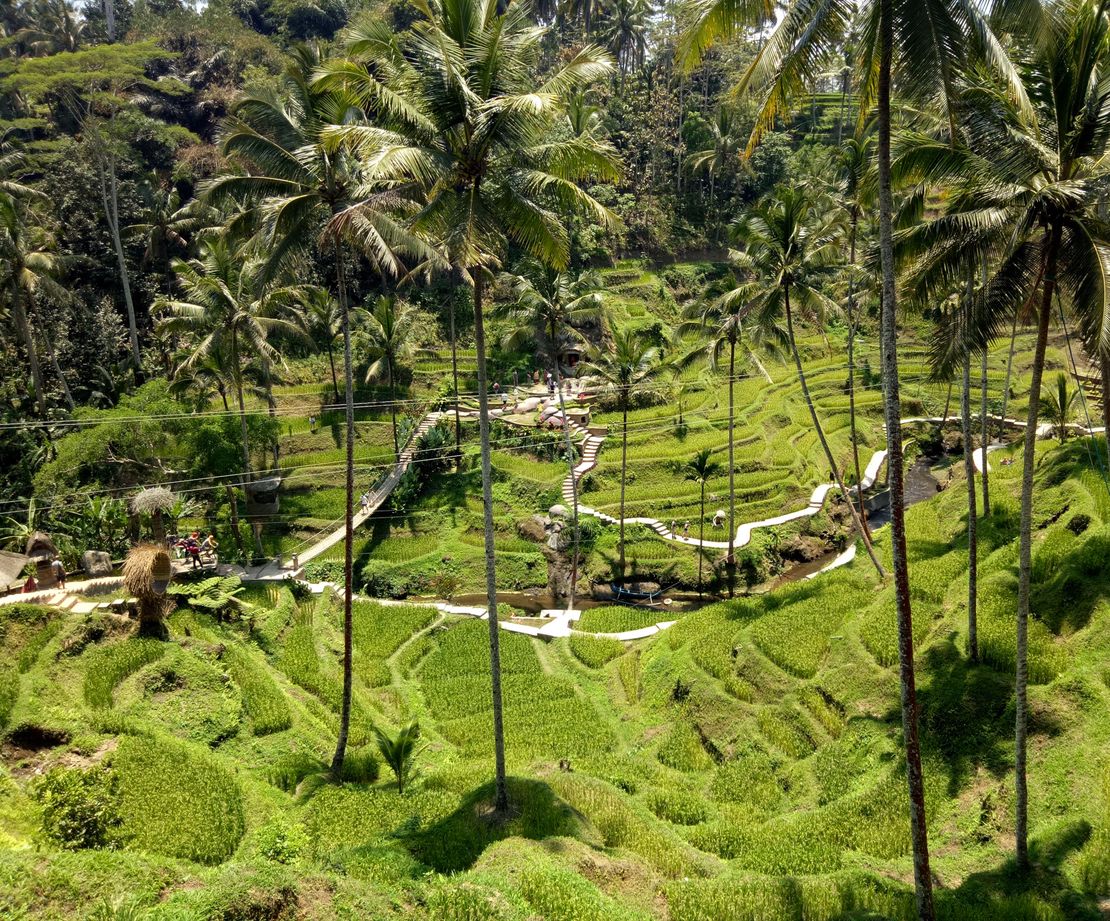
Tegallalang Rice Terrace stands as one of the most iconic, globally recognized, and visually breathtaking cultural landscapes in all of Southeast Asia. Nestled within a cool valley just a short drive north of central Ubud, this majestic destination forms an agricultural masterpiece that has been meticulously carved into the hillsides over thousands of years. The sweeping terraces cascade down the steep slopes like giant emerald staircases, glowing intensely under the morning sun and forming a signature silhouette that symbolizes the essence of rural Balinese life. Beyond its undeniable aesthetic appeal, Tegallalang serves as a living, breathing testament to the ancient Balinese philosophy of Tri Hita Karana, which emphasizes a harmonious relationship between the human realm, the spirit world, and the natural environment. This philosophical foundation is structurally expressed through Subak, Bali’s ancient, UNESCO-recognized cooperative irrigation network that channels crisp mountain spring water equitably down through the tiered paddies, binding entire farming communities together in shared ecological stewardship.
When you step past the ridge viewpoints and descend into the heart of the valley, you immediately step into an active, multi-generational agricultural ecosystem. The trails that wind across the narrow dikes are lined with soft, rich clay mud, weathered wooden sluice gates, and swaying coconut palms that cast dramatic long shadows across the landscape. Depending on the precise season of your visit, the visual character of the terraces changes dramatically. During the planting phase, the empty tiers mirror the sky like shards of broken glass, reflecting the passing tropical clouds. As the rice crops mature, the entire valley explodes into a dense ocean of vibrant, neon green, filling the air with the sweet, grassy scent of growing grain. Just before the harvest arrives, the landscape shifts into a warm, heavy blanket of shimmering golden-yellow stalks bowing under their own weight. Local farmers, often wearing traditional wide-brimmed conical palm-leaf hats called caping, can be seen tending to the delicate irrigation flows, cleaning weed clusters from the mud retaining walls, or carrying heavy balanced loads of freshly cut rice stalks across their shoulders using split bamboo poles.
Exploring the deeper recesses of Tegallalang requires a willingness to stray far past the commercialized tourist platforms lining the main highway. By crossing the small rustic stream at the bottom of the valley gorge and climbing up the steeper paths on the opposite ridge, you will leave behind the crowds and discover quiet, untouched pockets of rural paradise. Here, the hum of the main road fades away completely, replaced by the soothing, rhythmic trickle of flowing irrigation channels, the chirp of tropical crickets, and the gentle rustle of palm fronds in the breeze. Small, traditional wooden farm shacks dot the ridges, providing storage for tools and brief midday shade for the local workers. The complex engineering of the landscape becomes clear as you observe how the water flows seamlessly from one high tier down into the next via small bamboo conduits, ensuring no water is wasted. This immersive journey offers an unparalleled window into the profound patience, intense physical labor, and deep-seated community bonds required to keep this ancient agrarian art form alive in the modern world.
Tegallalang Rice Terrace offers an extraordinary, up-close engagement with world-class natural beauty and rich cultural heritage. The primary offering is the extensive, free-roaming trail system that allows travelers to hike directly through the active agricultural plots, creating world-class opportunities for landscape photography and immersive exploration. The site features an array of valley-view restaurants, traditional artisan craft stalls, and modern adventure attractions like high-altitude cable swings and floating photo nests perched over the valley rim.
Things to Do:
What to Avoid:
Suggestion to Improve: To elevate the guest experience, the local community management could implement a unified, transparent admission ticketing system that completely eliminates the informal, confusing donation checkpoints along the inner valley trails. Additionally, installing discreet, eco-friendly trail signage and reinforcing fragile handrails would greatly improve safety without disrupting the natural aesthetic of the canyon.
Tegallalang Rice Terrace is highly accessible, located approximately 20 to 25 minutes north of central Ubud along Jalan Raya Tegallalang. Travelers can choose from several transportation options depending on their budget, driving confidence, and desired convenience.
| Transportation Type | Pros | Cons |
|---|---|---|
| Personal Scooter Rental | Maximum schedule flexibility; easy to bypass traffic jams; very budget-friendly; easy parking. | Requires confident driving skills on narrow, winding, and congested highland roads; exposure to rain and sun. |
| Private Car & Driver | Safe, air-conditioned comfort; zero navigation stress; door-to-door service; customized day itinerary. | Higher financial cost; subject to traffic delays along narrow bottlenecks north of Ubud. |
| Ride-Hailing (Grab/Gojek) | Convenient on-demand booking from central Ubud; transparent upfront pricing; cash-free payment. | Drop-offs are easy, but securing a return ride out of Tegallalang can be difficult due to local driver zoning restrictions. |
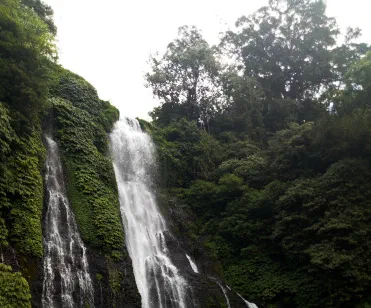
Tibumana Waterfall, known locally as Air Terjun Tibumana, stands as a …
Read More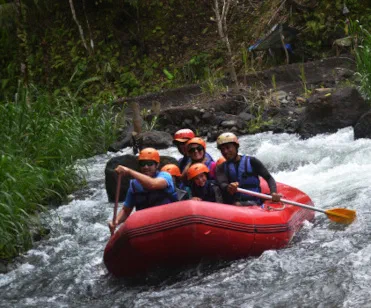
White-water rafting down the Ayung River in Ubud stands as …
Read More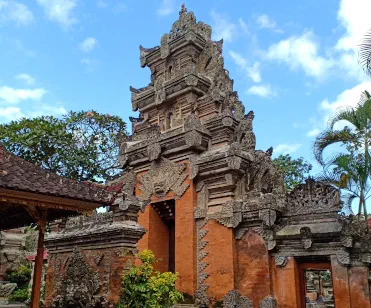
Ubud Palace, historically designated as Puri Saren Agung, stands proudly as the …
Read More