
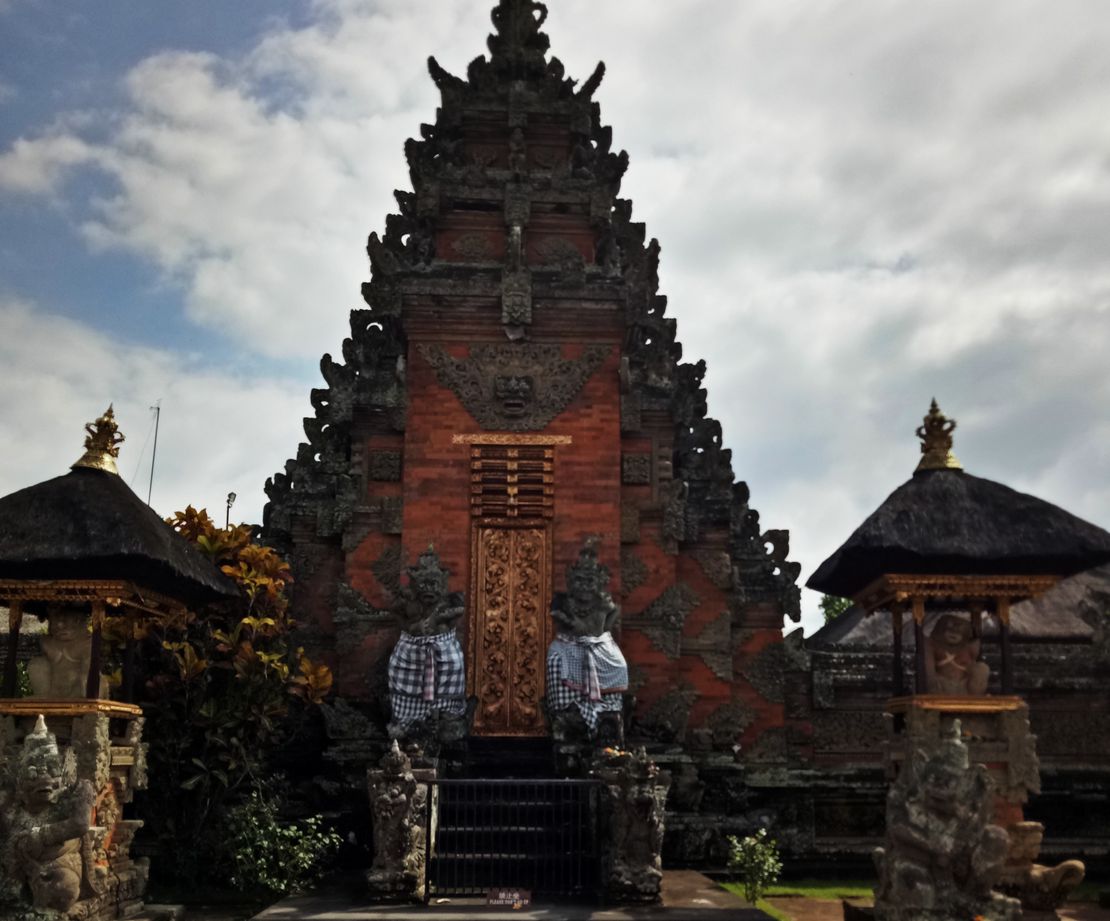
Taman Saraswati Temple, globally renowned as the Ubud Water Palace, stands as one of the most elegant, visually enchanting, and artistically significant temple landmarks in central Bali. Tucked discreetly behind the bustling cafe strips of Jalan Raya Ubud, this beautiful water temple serves as a peaceful haven of classical beauty right in the heart of town. Commissioned in 1951 by the late Prince of Ubud, Cokorda Gede Agung Sukawati, the temple was designed by Bali’s most celebrated master architect, Gusti Nyoman Lempad. The site was built specifically to honor Saraswati, the Hindu goddess of knowledge, arts, literature, wisdom, and music, resulting in a sanctuary that bridges profound spiritual meaning with master-level landscape design.
The defining masterpiece of Taman Saraswati Temple is its vast, mirror-like volcanic stone water ponds that frame the primary approach to the inner shrines. These expansive ponds are entirely covered in a thick, vibrant green blanket of thousands of giant pink lotus blossoms (Nelumbo nucifera), creating a stunning visual corridor that has made the temple an absolute favorite for photographers worldwide. A grand, elevated brick pathway cuts straight through the center of the lotus fields, leading your eye toward the temple’s main gate (kori agung). This towering red-brick gate is covered in intricate volcanic stone carvings, featuring the wide, menacing face of the guardian demon Bhoma and a grand statue of the goddess Saraswati herself. The contrast of the warm red bricks against the brilliant pink lotus petals and green leaves forms an exceptionally balanced aesthetic landscape.
While the inner courtyards remain strictly private for local worshippers seeking blessings for education and the performing arts, the outer lotus terraces are completely open to the public during the daytime. The temple grounds are home to some of Ubud’s most respected traditional dance troupes, who transform the elevated stone platforms into a live cultural stage every evening. Under the glow of warm oil lamps and the starlit sky, dancers dressed in shimmering gold silk costumes perform dramatic episodes from the Ramayana epic, accompanied by the hypnotic, metallic rhythms of a full gamelan orchestra. This evening transformation highlights how the temple remains an active, beating heart for classical Balinese arts, offering visitors an unparalleled mix of architecture, nature, and living performance culture.
Taman Saraswati Temple provides an exceptionally beautiful, highly accessible, and artistically rich cultural stop right in the center of Ubud. The primary offering is the breathtaking view of the expansive pink lotus ponds framing classical red-brick architecture, which is completely free to view from the front boardwalk paths during the day. The site features an adjacent open-air cafe, excellent lighting for morning photography, and nightly traditional dance performances.
Things to Do:
What to Avoid:
Suggestion to Improve: To preserve the peaceful, meditative quality of the site, temple authorities could introduce a clear separation between the public viewing decks and the commercial cafe seating. Installing small, subtle plaques detailing the architectural legacy of Gusti Nyoman Lempad would also greatly enrich the guest experience.
The temple is located right along Jalan Raya Ubud, situated immediately next to the Lotus Cafe and a short 2-minute walk west of the Ubud Art Market.
| Transportation Type | Pros | Cons |
|---|---|---|
| Walking (On Foot) | Easiest option; zero cost; completely avoids central Ubud’s intense vehicular traffic and parking hassles. | Only practical if your accommodation is located within central Ubud’s town perimeter. |
| Personal Scooter Rental | Fast travel times through town; however, roadside parking directly in front of the temple is strictly limited. | Finding public parking along the main road can be tough during afternoon hours. |
| Private Driver / Taxi | Cool air-conditioned comfort; convenient drop-off directly at the front lane entrance. | Highly vulnerable to long traffic gridlocks on the narrow, crowded main road. |
Pura Tirta Empul stands proudly as one of the largest, most active, and …
Read More
The Ubud Art Market, known locally as Pasar Seni Ubud, stands proudly as the …
Read More
The Ayung River, or Sungai Ayung, holds a legendary status as the absolute …
Read More