
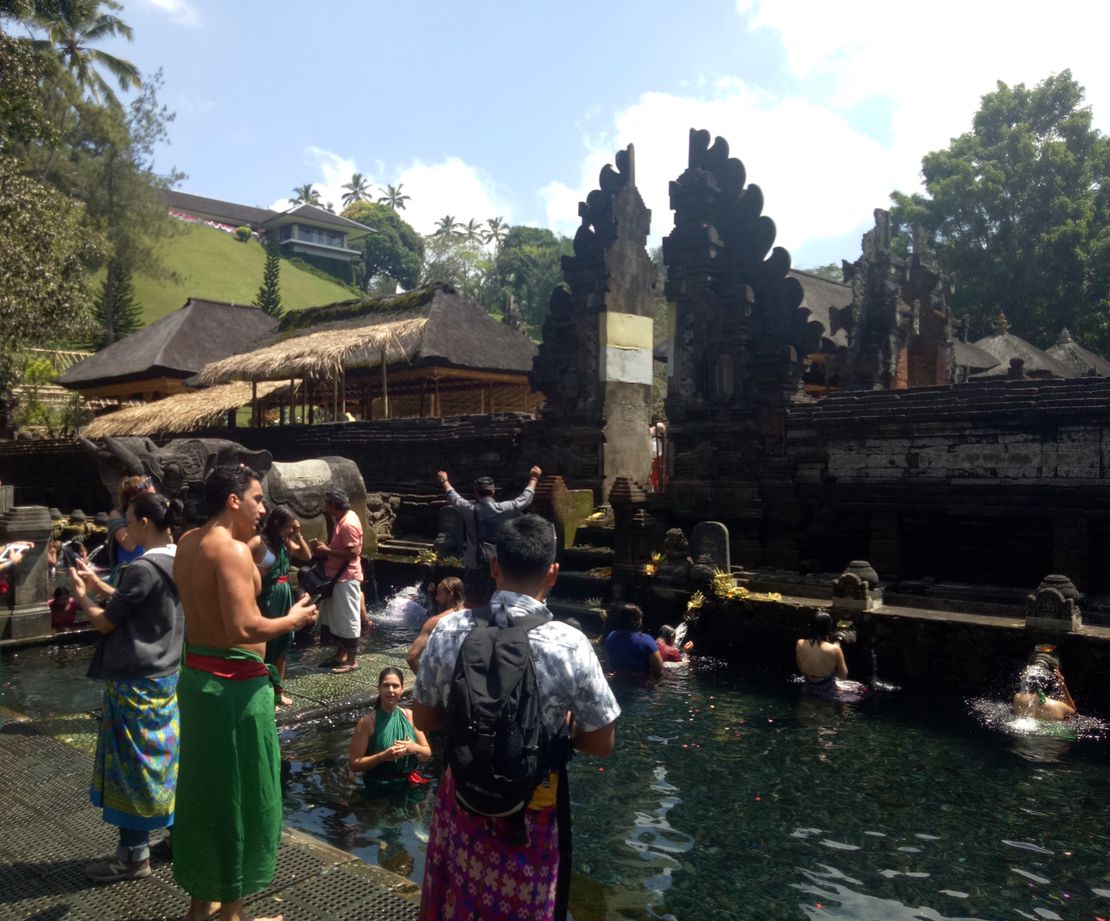
Pura Tirta Empul stands proudly as one of the largest, most active, and spiritually significant Hindu water temples in all of Bali. Nestled within the lush, verdant valley of the Tampaksiring region, just north of Ubud, this historic temple complex has drawn local worshippers and spiritual seekers for well over a thousand years. Founded in 962 AD during the storied Warmadewa Dynasty, the temple’s name translates directly to “Holy Water Spring,” referring to the crystal-clear mountain spring bubbling directly out of the earth within the central temple grounds. The site is dedicated entirely to Vishnu, the Hindu god of preservation, water, and life. The sacred spring feeds into a series of beautifully carved stone purification pools, where locals and international visitors alike participate in the melukat, an ancient, deeply therapeutic water cleansing ritual intended to purify the physical body, wash away negative energies, and bring spiritual clarity.
The layout of Pura Tirta Empul follows the classic Balinese temple design framework, divided into three distinct courtyards that represent progressive spiritual states: the Jaba Pura (outer courtyard), the Jaba Tengah (middle courtyard), and the Jeroan (inner courtyard). The middle courtyard serves as the active center for the water purification ritual. Here, two long rectangular pools are lined with 30 intricately sculpted stone water spouts, each holding a distinct spiritual name and individual purification purpose. Worshippers step waist-deep into the refreshing, cool mountain water, pressing their hands together in quiet prayer before bowing their heads directly under the heavy flow of the spouts. The water feels incredibly crisp and pure, originating from a massive, bubbling volcanic spring pool located in the inner courtyard. This protected pool features black volcanic sands that dance gently on the floor as the subterranean water pushes upward, surrounded by stone shrines and low-hanging banyan branches.
The historical value of Pura Tirta Empul stretches far past its ancient stone walls and mossy shrines. Perched high on the green hill overlooking the temple complex sits the Istana Tampaksiring, a grand presidential palace built in 1954 by Indonesia’s first president, Sukarno. The palace was intentionally designed to blend modern architecture with majestic views of the sacred water temple below, serving as a high-profile guest house for visiting foreign leaders. Down in the temple courtyards, the air remains thick with the aromatic scent of burning incense, mixed with the visual beauty of colorful canang sari leaf offerings containing vibrant flower petals, rice, and shredded pandan leaves. The regular presence of Balinese families dressed in traditional white temple lace and colorful sarongs creates a living cultural landscape, highlighting how these thousand-year-old water rituals remain tightly bound to modern Balinese life.
Pura Tirta Empul provides an incredible, active encounter with authentic Balinese spiritual traditions inside a wonderfully preserved historical environment. The primary offering is the opportunity to personally participate in the melukat purification ritual alongside local worshippers, offering a rare, immersive engagement with living Hindu culture. The temple features beautiful stone architecture, ancient shrines, clear informational signage, and helpful lockers where you can securely store your dry clothes and valuables.
Things to Do:
What to Avoid:
Suggestion to Improve: To better manage peak-hour congestion, temple authorities could implement a numbered ticketing cue for the purification pools during high-traffic holidays. Additionally, expanding the changing room facilities and ensuring the tile floors are regularly cleaned would greatly improve comfort and hygiene for international guests.
Pura Tirta Empul is located in Tampaksiring, roughly 30 minutes north of central Ubud via Jalan Raya Tampaksiring. The site can be reached through several transport methods.
| Transportation Type | Pros | Cons |
|---|---|---|
| Private Car & Driver | Cool air-conditioning; hassle-free navigation; easy combination with nearby sites like Gunung Kawi. | Higher overall cost; subject to traffic backups on narrow rural roads leading north out of Ubud. |
| Personal Scooter Rental | Highly affordable; easily weaves past traffic; large scooter parking area on-site. | Requires confident driving skills on winding roads; exposure to intense tropical sun or sudden rain. |
| Ride-Hailing (Grab/Gojek) | On-demand booking from Ubud; clear upfront pricing listed directly on the mobile app. | Easy for arriving, but finding a return ride out of Tampaksiring can be tough due to zoning restrictions. |
Tibumana Waterfall, known locally as Air Terjun Tibumana, stands as a …
Read More
The Ubud Art Market, known locally as Pasar Seni Ubud, stands proudly as the …
Read More
Tegallalang Rice Terrace stands as one of the most iconic, globally …
Read More