
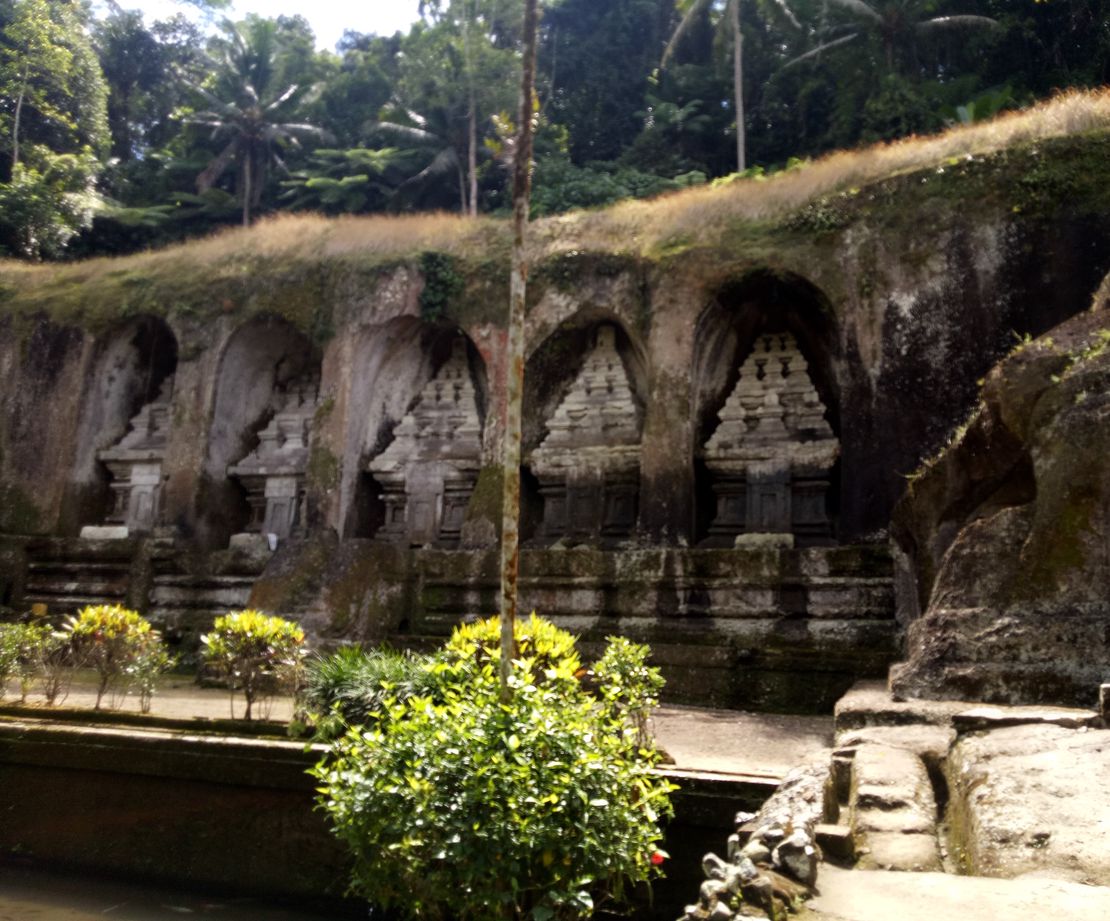
Gunung Kawi Temple stands as one of Bali’s most ancient, structurally spectacular, and profoundly majestic archaeological monuments. Nestled deep within a lush, verdant river valley in the Tampaksiring region, northeast of Ubud, this 11th-century complex comprises a collection of ten colossal shrines (candi) carved directly into the sheer volcanic stone cliff faces. The name “Gunung Kawi” translates literally to “Mountain of Poetry” or “Sculpted Mountain,” reflecting the artistic marvel of these 7-meter-high monuments. Historians believe this expansive site served as the grand royal burial complex and memorial sanctuary for King Udayana, his queen Mahendradatta, and their sons of the historic Warmadewa Dynasty, making it an invaluable window into Bali’s pre-colonial era.
The journey down to the heart of Gunung Kawi is an unforgettable, immersive trek through rural paradise. Visitors must descend a grand stone staircase of over 300 steps that drops sharply into a deep, cool river canyon. The paths are lined with terraced rice paddies, coconut palms, and small souvenir stalls operated by local villagers. As you reach the canyon floor, the rushing waters of the sacred Pakerisan River wrap around the site, splitting the complex into two main halves connected by a rustic stone bridge. On the eastern side of the river stand five prominent shrines carved into the rock wall, widely believed to be dedicated to King Udayana, his queen, and his three royal sons. On the opposite western bank sit four additional shrines dedicated to the king’s royal concubines, while a tenth hidden shrine sits isolated further down the river path, adding to the spiritual mystery of the gorge.
The architectural engineering of these shrines is unique in Balinese history. Rather than being built outward from loose stone blocks, each monument was intricately hollowed out from the living stone cliff face, framed inside a protective arched niche to shield the delicate carvings from weathering. The bases of the shrines feature small stone chambers where solid rock boxes containing gold foils, semi-precious stones, and mirrors were placed during royal consecration ceremonies. Adjacent to the massive cliff carvings sits a sprawling, labyrinthine network of stone-cut meditation caves, complete with small rock windows, low ceilings, and smooth stone floors where holy hermits slept. The air within the river gorge remains incredibly fresh, cool, and filled with the low rumble of the river, providing a therapeutic, reverent escape that beautifully preserves the ancient soul of Bali.
Gunung Kawi Temple offers an exceptional, crowd-free encounter with ancient stone architecture and grand natural scale. The primary offering is the opportunity to view some of the largest pre-colonial monuments in Southeast Asia while walking through an untouched, pristine river valley. The site provides a peaceful alternative to more commercialized temples, featuring authentic stone-cut meditation rooms, stunning terraced viewpoints along the stairs, and a serene, spiritual energy.
Things to Do:
What to Avoid:
Suggestion to Improve: To assist travelers during the demanding return climb, the local management could install a few discreet, shaded wooden rest pavilions with benches along the long stair pathways. Providing clearer historical signage in multiple languages near the meditation caves would also greatly enrich the educational experience.
Gunung Kawi Temple is located in Tampaksiring, approximately 35 minutes north of central Ubud via Jalan Raya Tampaksiring.
| Transportation Type | Pros | Cons |
|---|---|---|
| Private Car & Driver | Safe, air-conditioned comfort; effortless navigation; easy to combine with nearby Pura Tirta Empul. | Higher overall cost; subject to traffic slow-downs on the narrow highland access roads. |
| Personal Scooter Rental | Highly budget-friendly; allows you to weave past traffic jams; easy parking available near the gate. | The long drive from Ubud requires sharp concentration; exposure to tropical sun or sudden mountain rain. |
| Grab / Gojek Apps | Convenient on-demand digital booking from central Ubud; transparent, upfront pricing. | Easy for arriving, but securing an available driver for a return trip out of Tampaksiring can be highly challenging. |
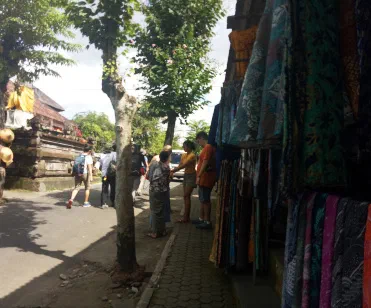
The Ubud Art Market, known locally as Pasar Seni Ubud, stands proudly as the …
Read More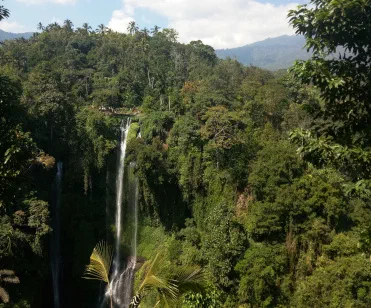
Kanto Lampo Waterfall is a highly unique, visually spectacular, and …
Read More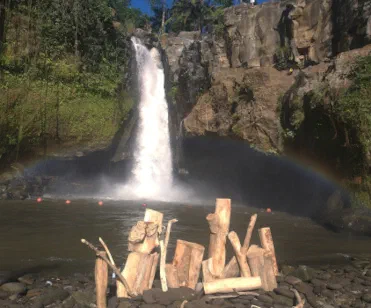
Tegenungan Waterfall stands as one of the most powerful, high-volume, and …
Read More