
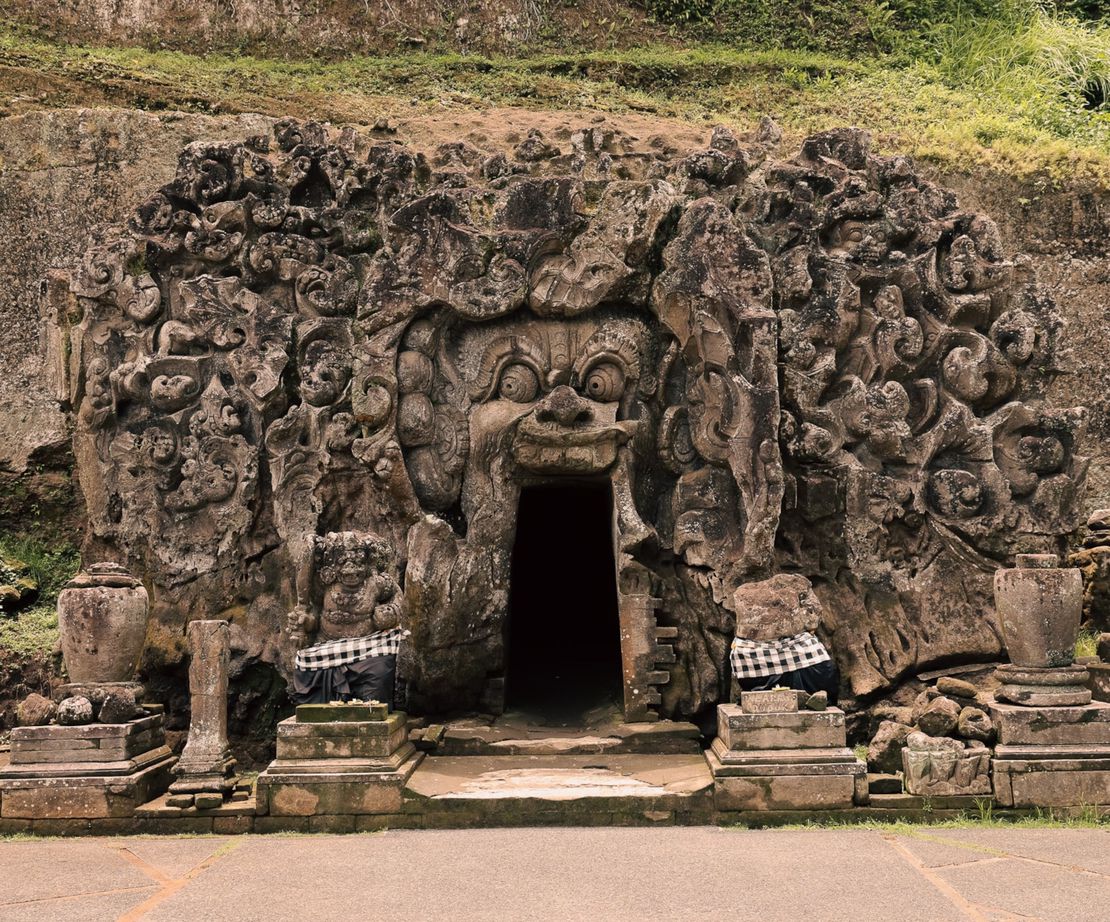
Goa Gajah, historically renowned as the Elephant Cave, stands as one of the most profoundly enigmatic, architecturally unique, and significantly important archaeological sanctuaries in all of Indonesia. Situated in the Bedulu village region, just a brief five-minute drive southeast of central Ubud, this fascinating heritage complex serves as a structural crossroads where early Balinese Hinduism and ancient Buddhist meditative traditions seamlessly intertwine. Dating back to the 9th century during the peak of the storied Warmadewa Dynasty, the site was deliberately constructed at the meeting point of two rivers to serve as a deep spiritual sanctuary for royal ascetics, high priests, and hermits seeking complete isolation for deep meditation, text translation, and prayer.
The defining centerpiece of the entire archaeological reserve is the cave entrance itself, which has been carved out of the face of a sheer volcanic stone ridge. The exterior facade of the cave features an incredibly dense, detailed network of stone relief carvings depicting menacing earth spirits, mythical forest demons, and rolling waves. The mouth of the cave forms a dramatic opening, framed by the wide face of a monstrous guardian figure that many historians believe represents the earth god Bhoma or the dark forest protector Canti. When you step through the dark stone mouth into the T-shaped cave chamber, the air cools instantly, holding the rich scent of burning incense from small daily offerings. Inside the dim rock niches sit ancient stone statues, including a historic representation of Ganesha, the elephant-headed Hindu deity of wisdom and obstacle removal, alongside a row of three sacred stone lingam-yoni shrines dedicated to Shiva.
Directly outside the dark cave entrance lies a grand archaeological excavation area that was hidden beneath thick volcanic mud for centuries until its discovery in 1954 by Dutch researcher J.C. Krijgsman. This expansive open courtyard houses two large, formal rectangular stone bathing pools lined with six beautifully sculpted sandstone statues of water nymphs (apsaras). These elegant figures act as water spouts, holding sacred water jars that continually pour fresh spring water into the pools below. Following the stone paths further down into the lush green valley behind the cave reveals a quiet jungle gorge filled with giant moss-covered rocks, ancient banyan tree roots, and the crumbling stone ruins of a 9th-century Buddhist cliff temple. This quiet valley walk highlights the ancient coexistence of diverse spiritual paths, offering a powerful window into the deep historical layers of Bali.
Goa Gajah offers an incredible, highly educational encounter with ancient Indonesian history and sacred stone architecture. The primary offering is the opportunity to step inside a thousand-year-old rock-cut meditation cave and explore beautifully excavated ritual bathing pools, providing a rare window into Bali’s pre-colonial past. The site features clear walking paths, helpful historical information plaques, beautiful jungle valley trails, and a highly accessible location close to Ubud.
Things to Do:
What to Avoid:
Suggestion to Improve: To improve the educational value of the site, the park management could introduce downloadable digital audio guides or multi-lingual QR codes at key architectural points. Setting up a more structured layout for the vendor marketplace near the exit would also create a more relaxing, unhurried exit experience for guests.
Goa Gajah is exceptionally easy to reach, located along the main highway in Bedulu, roughly 10 minutes from central Ubud.
| Transportation Type | Pros | Cons |
|---|---|---|
| Personal Scooter Rental | Highly efficient; very budget-friendly; allows for quick parking in the main front lot. | Must drive carefully along the busy main highway; exposure to midday traffic and sun. |
| Private Car & Driver | Excellent air-conditioned comfort; zero navigation stress; easily combined with nearby Batuan Temple. | Higher cost; subject to minor traffic delays along the primary Ubud-Gianyar transit route. |
| Ride-Hailing (Grab/Gojek) | Very fast booking from central Ubud; clear, upfront pricing; convenient door-to-door drop-off. | Securing a ride to the site is easy, but you may occasionally wait a few extra minutes for a return pick-up. |
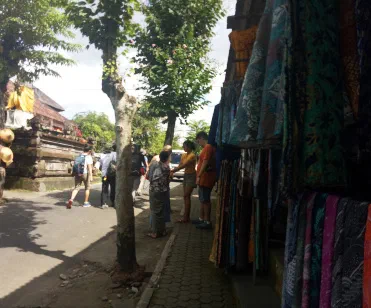
The Ubud Art Market, known locally as Pasar Seni Ubud, stands proudly as the …
Read More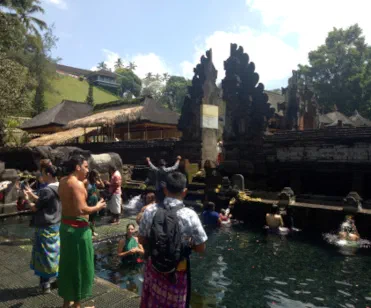
Pura Tirta Empul stands proudly as one of the largest, most active, and …
Read More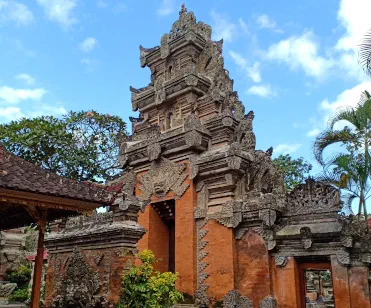
Ubud Palace, historically designated as Puri Saren Agung, stands proudly as the …
Read More